
Seven benefits of yoga for desk workers

In partnership with:

If you spend a lot of your day sitting at a desk, driving, working on a laptop, or looking down at a phone, your body will usually tell you about it. This might show up through tight hips, a stiff lower back, rounded shoulders, tension in the neck, headaches, poor posture, or just that general feeling of being a bit ‘stuck’ in your body by the end of the day.
Yoga helps to counteract the positions many of us spend hours in every day. For desk workers, yoga is less about touching your toes and more about keeping your body strong, mobile and comfortable enough to support everyday life. We want healthy joints and the ability to feel well and healthy, and to not feel any older than we actually are.
Here are seven benefits of yoga for desk workers, from our friends at The Good Food Yogi.
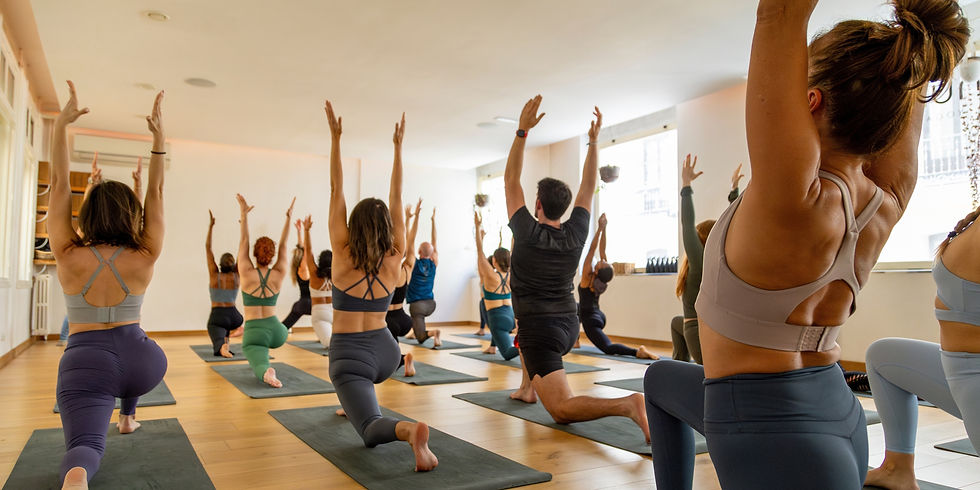
1. Yoga helps release tight hips
Tight hips are one of the biggest complaints from people who sit a lot. When you sit, your hips are in a shortened position for long periods. This can make the front of the hips feel tight and can also contribute to lower back discomfort.
Yoga can help by gently opening the hips, improving mobility and giving the pelvis more freedom to move. This is important because when the hips are restricted, the lower back often tries to compensate. Movements such as lunges, hip openers and gentle twists can all help desk workers feel less stiff and more mobile.
But it is not just about stretching. For many people, especially those who are naturally more mobile, the hips also need strength and stability. A balanced yoga practice helps you work on both.
2. Yoga strengthens the core for better posture
A strong core is not just about sit-ups or having visible abdominal muscles. For desk workers, core strength is about support. It helps your spine stay more stable, your posture feel less effortful and your lower back feel less overloaded.
Many people with back discomfort do not necessarily need more stretching. They often need better support from the deeper core muscles, the muscles that help stabilise the spine and pelvis.
Short, regular core-focused yoga sessions can make a real difference here. You do not need to do an hour every day. Even 15 to 30 minutes of focused movement can help you build better support and improve body awareness, waking up the muscles you need before you spend the day sitting, driving, or working at a desk.
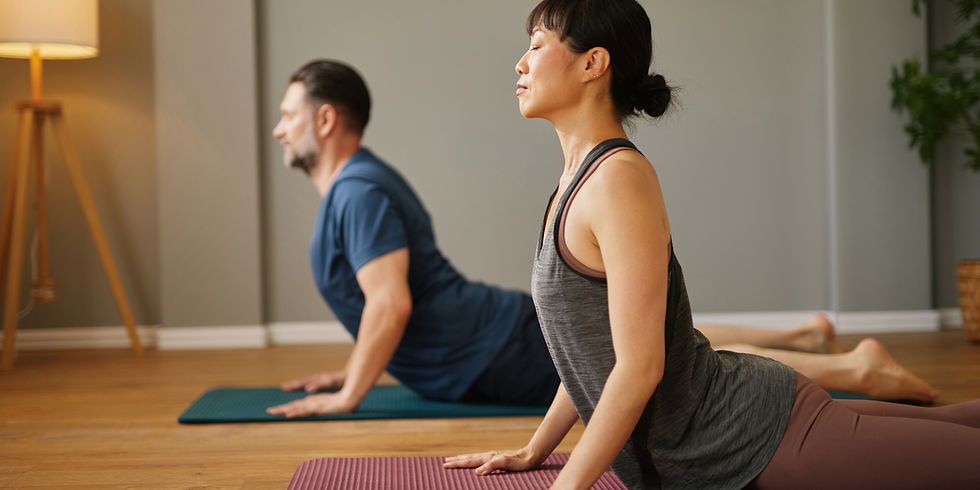
3. Yoga helps reduce neck and shoulder tension
Desk work often pulls the body forwards. The head moves slightly in front of the spine, the shoulders round, and the chest becomes tight. Over time, this can create tension in the neck, shoulders and upper back. Yoga can help by opening the chest, improving shoulder mobility and strengthening the muscles of the upper back.
This matters not just for posture but for breathing too. When the chest is tight and the upper body is collapsed forwards, it can be harder to breathe fully and freely. Simple movements that open the front of the body and strengthen the back of the body can help you feel more upright, more spacious and less compressed.
4. Yoga improves body awareness
One of the most useful benefits of yoga is that it helps you notice your habits. You might start to realise that you always lean into one hip, round your shoulders when concentrating, grip your jaw during emails, or hold your breath when you are under pressure.
This awareness is powerful because it gives you the chance to change things before they become a bigger problem. Yoga teaches you to listen to your body more clearly; notice imbalances, which we all experience and learn tools in a practical way to make a real change in the body, for the better.
5. Yoga helps balance strength and mobility
Many people assume yoga is just stretching, but a good practice should also build strength. This is especially important for desk workers because the body needs balance.
If you are very stiff, you may need more mobility work. If you are naturally flexible, you may need more strength and control. If you have recurring aches and pains, you may need to look at which muscles are doing too much and which ones are not doing enough. Yoga is helpful because it can bring all of these pieces together in one practice.
6. Yoga can help you feel calmer & more focused
Desk work is mentally demanding. Many people spend the day jumping between emails, meetings, screens, decisions and deadlines. The body may be sitting still, but the nervous system is busy. Yoga gives us a chance to move, breathe and reset.
Again, this does not need to mean lying on a mat for an hour in silence. Even a short morning practice can help you feel clearer, calmer and more grounded before the day begins.
Movement helps shift tension. Breathing helps regulate the nervous system. And taking a little time away from your screen can help you return to work with more focus and clarity.

7. Yoga is easier to stick to when it is short and regular
One of the biggest mistakes people make is thinking yoga has to be a long class to count. For desk workers, consistency is usually more important than duration.
A few short sessions each week can be far more useful than one long class every now and again. Regular movement gives your body repeated reminders of how it is designed to move.
This is why short morning yoga classes work so well. They are easier to fit into a busy schedule, and they help set your body up before the working day begins. You do not need to wait until you are in pain or completely stiff by the evening. You can build strength, mobility and better posture in small, manageable doses.
A practical way to use yoga if you sit all day
If you are a desk worker, your yoga practice should ideally include:
Core strength to support your lower back
Hip mobility to counteract sitting
Glute and leg strength for better stability
Chest opening to improve posture and breathing
Upper back strength to reduce rounded shoulders
Gentle twists and spinal movement
Breathwork to calm the nervous system
Regular short practices that you can actually stick to
The aim is not to become the most flexible person in the room, but to feel better in your own body.
Your body does not need perfection. It needs movement, strength, mobility and attention. A short, consistent yoga practice can help you feel less stiff, more supported and more at home in your body, both at your desk and away from it.
Comments